
On October 2, 2026 (New York local time), Project Manager Kento Kawaharazuka and project collaborator Takato Horii, an Associate Professor at The University of Osaka, delivered invited talks at New York University’s Center for Robotics and Embodied Intelligence (CREO).
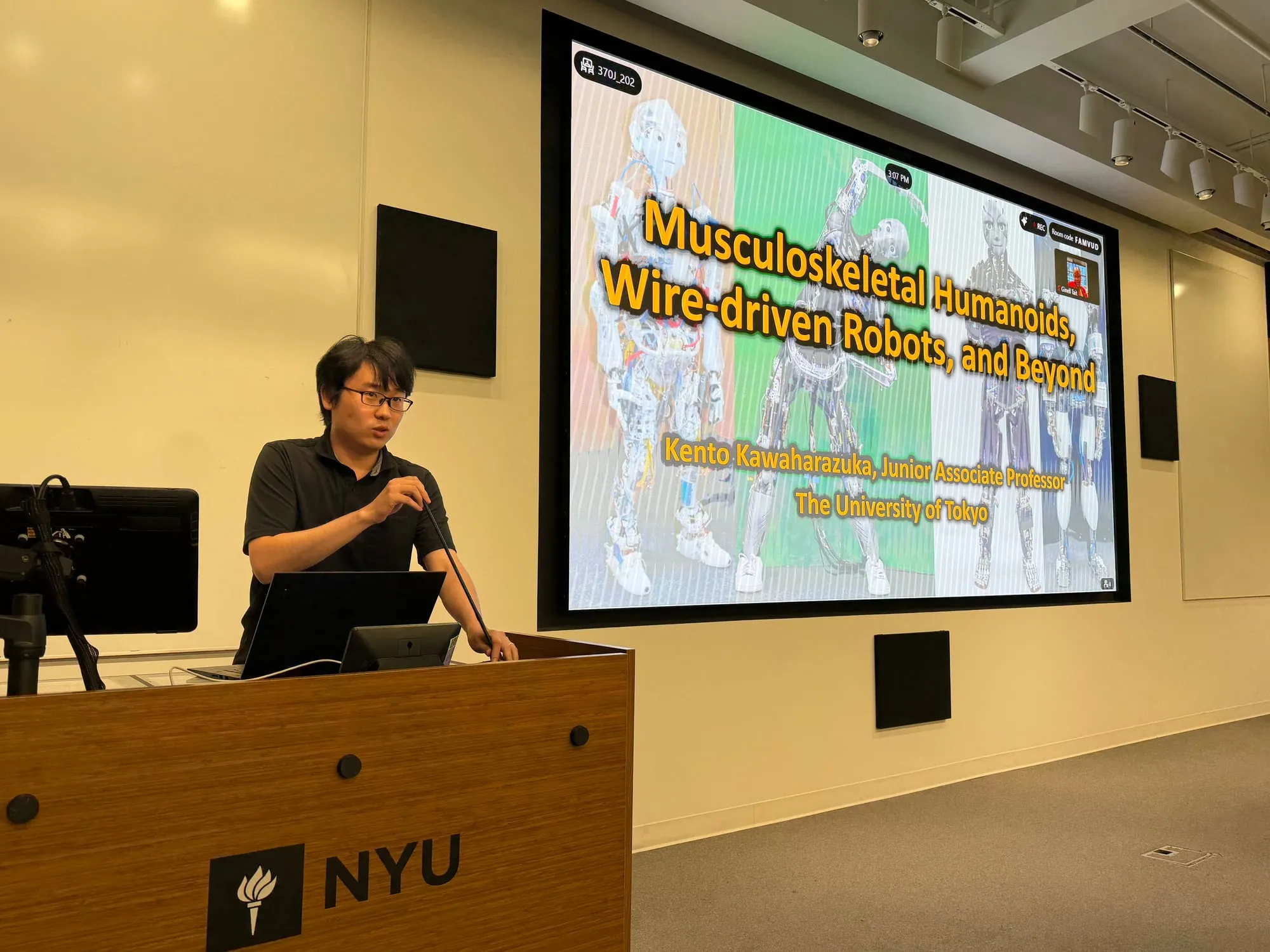
PM Kawaharazuka’s talk, “Musculoskeletal Humanoids, Wire-driven Robots, and Beyond,” surveyed biomimetic humanoid research, featuring the musculoskeletal designs of Kengoro and Musashi, alongside non-biomimetic robots driven by wires and tendon mechanisms inspired by muscles. He covered methods for controlling these systems through learning, then presented open-source hardware efforts to broaden access to quadrupeds, bipeds, manipulators, and robots using wire actuation.
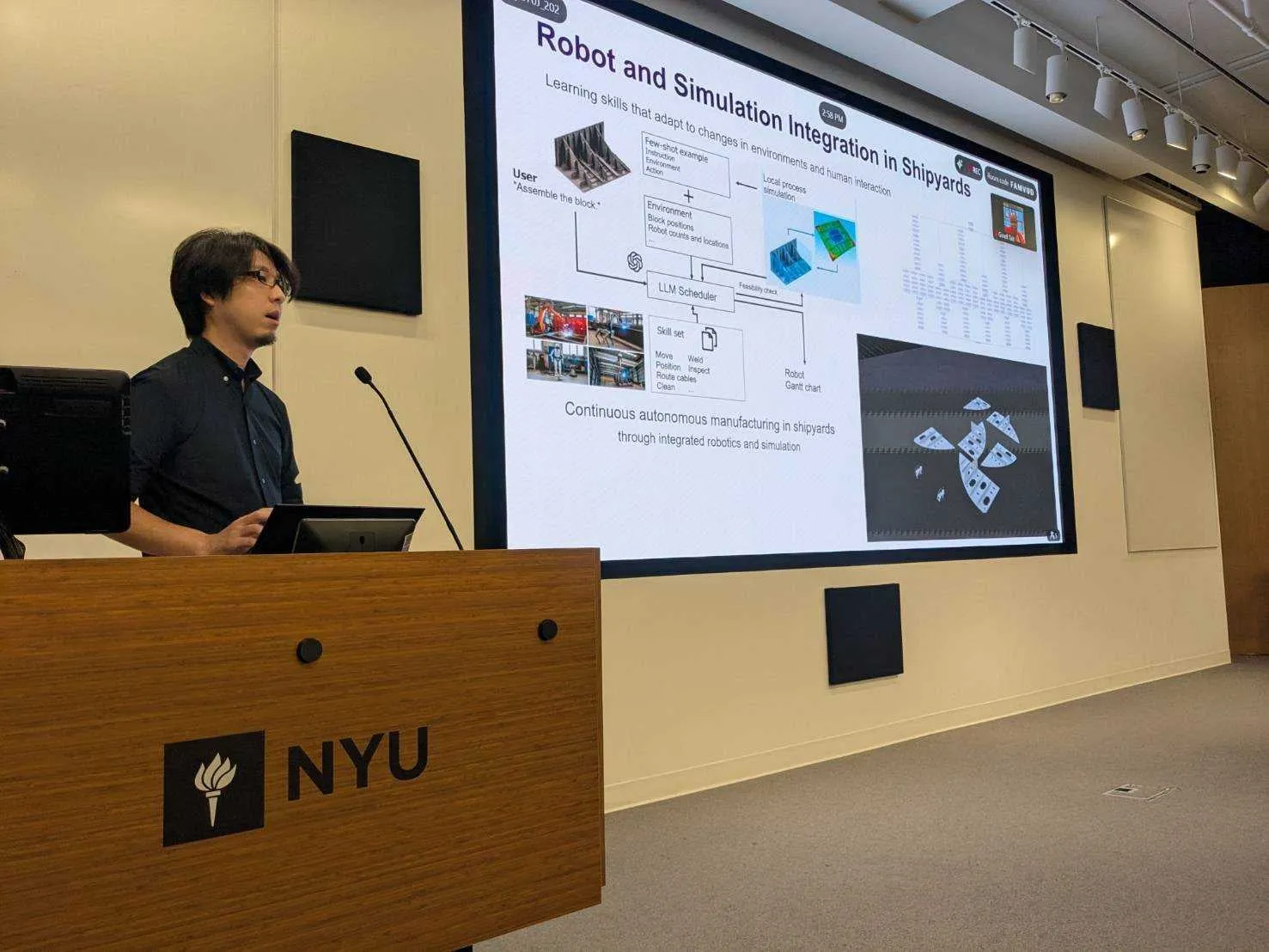
Associate Professor Horii’s talk, “From Language to Coordination: Multi-Robot Task Planning with LLMs and Optimization,” presented LiP-LLM for coordinating robots with differing capabilities in response to language instructions. It combines LLMs, dependency graphs, and linear programming: the models choose available skills and infer ordering constraints, while optimization assigns work to robots. Independent tasks can run concurrently within these constraints. Simulations with manipulators and mobile platforms demonstrated higher success rates and more efficient plans than other LLM-based approaches. He also examined the strengths, limitations, and practical deployment challenges of this combination.
Related link: Seminar announcement on Luma